Vision Document
Reclaiming a Cathedral of Female Authority
There are moments in history where something broken becomes visible enough that it can no longer be ignored. Scotland carries one of those fractures. Between the 16th and 18th centuries, thousands of women were persecuted, silenced, and executed under the Witchcraft Acts. Many were healers, midwives, and knowledge holders within their communities. In 2022, the Church of Scotland and the Scottish Government formally apologised. But apology is not reparation. This project is an opportunity to act, not symbolically, but structurally, to restore the wisdom that was suppressed, persecuted, and nearly erased.
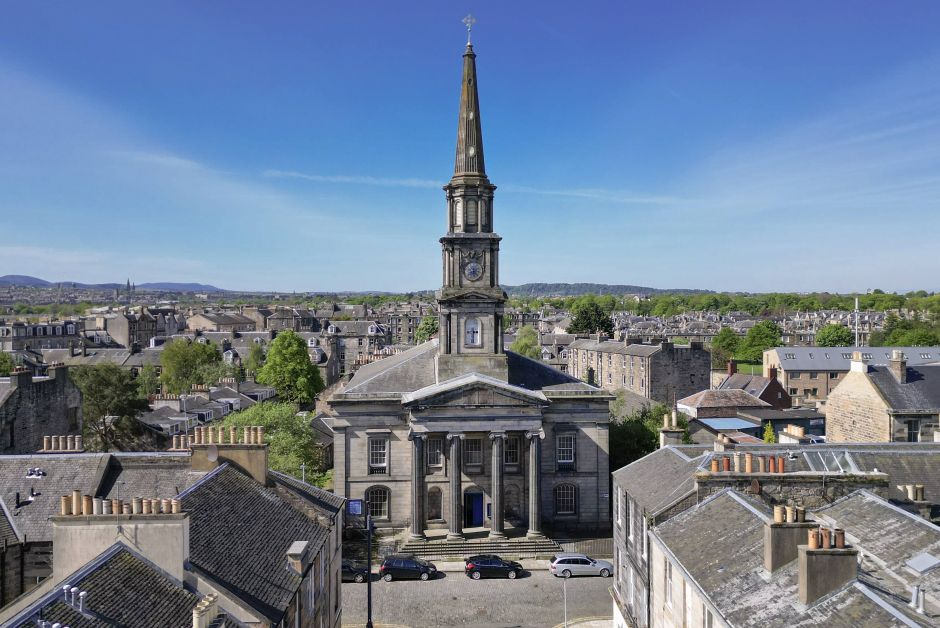
Leith North Church and Hall, 51–55 Madeira Street, Edinburgh, EH6 4AX
Why Now
The legacy of the Scottish witch trials has not simply disappeared. It lives on culturally, relationally, and, as emerging research in trauma science and epigenetics suggests, potentially even physiologically.
In recent years, a growing national movement has called for justice, recognition, and memorialisation. Campaigns led by organisations such as Witches of Scotland and Remembering the Accused Witches of Scotland have built public awareness. The Church of Scotland's 2022 apology marked an important moment of acknowledgement.
But acknowledgement alone does not create change.
At the same time, we are seeing significant and growing demand for new kinds of spaces:
These are not fringe ideas. They are increasingly recognised across healthcare, education, and organisational leadership as essential to addressing the complexity of modern life.
And yet, despite this convergence of need, history, and emerging understanding, there are very few dedicated physical spaces designed to meet it.
The Vision
At the centre of this project is a specific building. A former church in Leith, currently available for acquisition at approximately £870,000.
Leith sits at the heart of a wider regeneration of Edinburgh, making it an ideal location for a project that bridges heritage and future vision.
The building itself carries both presence and potential. High ceilings, traditional stone architecture, and an open internal structure offer the physical conditions for gathering, reflection, teaching, and community use at scale. It is large enough to hold multiple forms of activity, while still retaining the intimacy required for deep, personal work.
In addition to the main church space, the sale includes a separate hall building. This provides capacity for administration and team working, parallel programming, partnership and collaboration with aligned practitioners, and income generation through venue hire and hosted events. This contributes directly to long-term financial sustainability.
A way of taking a building with historical weight and reimagining its purpose for contemporary need.
A Prototype for What Comes Next
This is not just a building. It is a prototype.
A model for how we might:
If successful, this model has the potential to be adapted and replicated across the UK and internationally, wherever similar conditions and histories exist.
Many countries hold their own histories of persecution, silencing, and exclusion, particularly in relation to women and marginalised knowledge systems. This project offers a tangible, replicable model. A way of transforming spaces once associated with authority and control into spaces of restoration, agency, and collective wellbeing.
The Broader Impact
When women are supported to develop self-trust, emotional resilience, and relational capacity, the effects extend far beyond the individual. They shape:
This project recognises that supporting women is not a niche intervention. It is a strategic one. One that strengthens the fabric of society itself.
Financial Overview
The total investment required to acquire, restore, and launch the project is estimated at:
| Building acquisition Current market value, Leith North Church |
£870,000 |
| Renovation and fit-out Structural, interior, heating, accessibility, safety, furnishing |
£1.5–2M |
| Programme launch and delivery Curriculum, facilitator training, initial delivery costs |
£150–200K |
| Operating runway (12–24 months) Core team, operations, marketing, partnerships |
£300–500K |
| Total estimated investment | £2.8–3M |
Renovation estimates are based on early-stage conversations with sector specialists, including input from Development Trusts Association Scotland, and reflect comparable restoration projects of a similar scale.
An Invitation to Lead
This project requires a level of backing that reflects both its scale and its significance.
We are seeking a lead philanthropic partner to support the acquisition, restoration, and launch of this centre. Either in full, or as the majority contributor within a wider funding structure.
This is an opportunity to play a defining role in establishing a nationally significant space for women's wellbeing, leadership, and cultural repair.
What a lead investment enables:
A single, decisive investment at this stage would move this project from vision to reality. Swiftly, and with integrity.
We are also open to a blended funding model, including major philanthropic contributions, aligned grant funding, and strategic partnerships. However, a lead partner has the potential to accelerate the project significantly and shape its early development in a meaningful way.
If you or your organisation are in a position to lead, partner, or contribute to this project, we would welcome the conversation.
Get in Touch